Residential License # 890459
Commercial License # 3667

Opening Hours 9:00 am to 6:00 pm


Call Us Today!
Residential License # 890459
Commercial License # 3667
Opening Hours 9:00 am to 6:00 pm
Call Us Today!

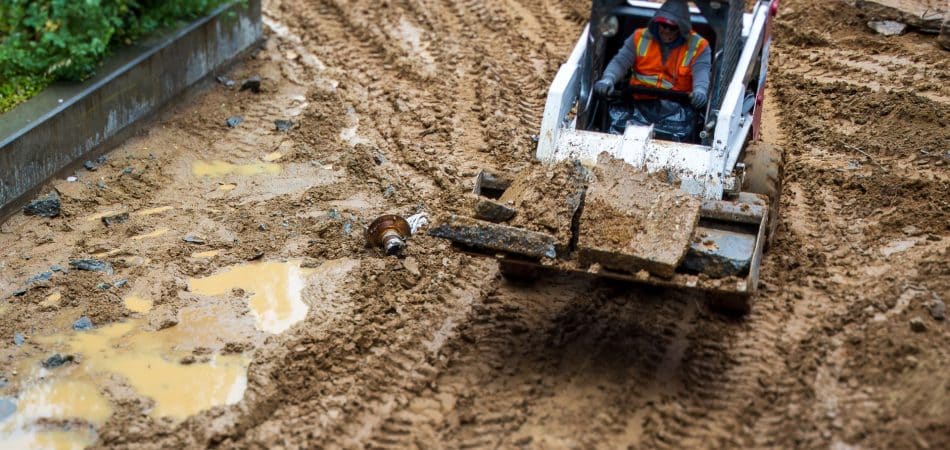
New Orleans sits on soft, water-saturated alluvial soil. The water table often sits just two to five feet below the surface. That combination changes equipment choice, foundation removal, backfill, and drainage planning on nearly every demolition or excavation project here.
Every demolition or excavation project in New Orleans starts with the same variable: the ground itself. New Orleans soil conditions differ sharply from the sand and gravel base found in much of the country. The city sits on soft, river-deposited clay and organic material instead of solid bedrock. That soil, combined with a shallow water table, decides which equipment fits on site and how deep a crew can safely dig. It also determines what has to happen before backfill goes back into the ground. Property owners planning a teardown or a major excavation need to understand these conditions before work begins, not after equipment gets stuck or a trench wall gives way.
TurnKey Demo Team has planned demolition and excavation jobs across New Orleans and the surrounding parishes for years, matching equipment and methods to the soil each site actually has. A quick call sets up a free estimate that accounts for soil type, water table depth, and drainage before the first machine ever shows up.
New Orleans sits mostly on soft alluvial soil deposited by the Mississippi River. Firmer natural levee ground sits near older, higher neighborhoods, while softer backswamp soil fills the lower areas between them. Crews need to know which type they are working with before choosing equipment or planning a dig. The Louisiana Geological Survey classifies natural levee soil as a mix of sandy silt over lean and fat clay, which gives it more bearing capacity than the ground behind it. Backswamp areas, by contrast, formed as slow-moving floodwater dropped fine clay and organic material into low, poorly drained basins.
 TurnKey Demo Team
 Jul 31, 2026