Residential License # 890459
Commercial License # 3667

Opening Hours 9:00 am to 6:00 pm


Call Us Today!
Residential License # 890459
Commercial License # 3667
Opening Hours 9:00 am to 6:00 pm
Call Us Today!


A detached garage or shed under about 200 square feet in most Louisiana parishes can often be removed without a full demolition permit, though local rules vary by jurisdiction. Hand demolition works for small wood-frame sheds, while a mini excavator is the safer, faster choice for garages with concrete slabs or attached utilities. Property owners should weigh their own time, tool access, and disposal logistics against the cost of hiring a licensed crew before deciding.
Garage and shed demolition looks simple from the outside. A wood-frame structure, four walls, a roof, maybe a slab underneath. Plenty of Louisiana homeowners start the job with a sledgehammer and a rented dumpster before realizing the project has more moving parts than expected. Old garages built before the 1980s may hide lead paint or asbestos siding, slabs can be reinforced with rebar that resists hand tools, and disposal rules for treated lumber and shingles differ from ordinary household trash.
This guide breaks down when a do-it-yourself teardown makes sense, when a licensed contractor is worth the cost, and what factors change the calculation between a simple backyard shed and an attached two-car garage. Homeowners across the New Orleans area can also visit the TurnKey Demo Team homepage for a broader look at residential demolition services before making a call either way.
Small, single-story wood sheds under roughly 120 square feet with no slab are the best DIY candidates. A prefab resin or wood shed on skids or gravel can usually be dismantled with a pry bar, circular saw, and a couple of extra hands in a weekend. Once a structure grows past that size, or sits on a poured concrete pad, the physical demands and disposal volume climb fast. A single-car garage runs 200 to 400 square feet and often has a slab, electrical service, and sometimes plumbing, which pushes the project past what most homeowners can safely manage alone.
Weight matters as much as square footage. Roof trusses, especially on older sheds with heavier lumber, are awkward and dangerous to bring down without a plan for where the structure falls. A structure with a loft or a second story adds a fall hazard that changes the risk profile entirely.
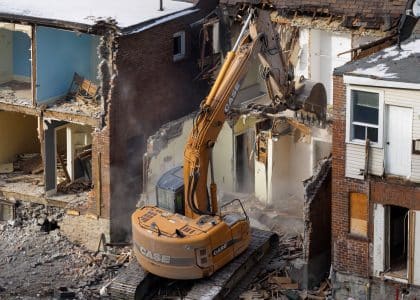
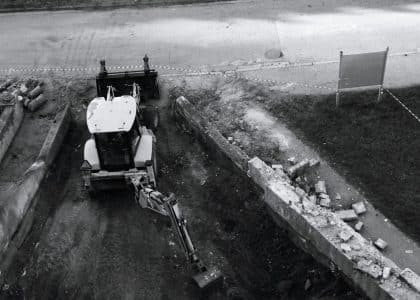
A professional crew brings equipment, disposal logistics, and utility disconnection experience that a homeowner rarely has on hand. A mini excavator with a grapple or hammer attachment can bring down a garage slab and frame in a fraction of the time a hand crew would need, and it handles reinforced concrete without wearing out a rented jackhammer. Crews also know how Louisiana parishes classify construction and demolition debris, which keeps a project from running into an unexpected landfill rejection.
Utility disconnection is where DIY projects most often go wrong. A garage wired for a workshop or an old shed with a buried electrical line to a light fixture can still be live. Residential demolition crews coordinate disconnection before any tearing begins, which removes one of the more serious risks in a backyard project.
It depends on square footage, structure type, and the parish or city where the property sits. Many jurisdictions in the New Orleans metro area exempt small accessory structures under a set size from demolition permitting, but a garage attached to the main house, or one with its own electrical panel, is treated differently than a freestanding tool shed. Rules also change if the structure sits near a property line or in a flood zone overlay. Readers who want a fuller breakdown of when Louisiana demolition projects need permits can review the site’s dedicated permit guide for New Orleans specifically.
Wood framing, asphalt shingles, metal roofing, and concrete each follow different disposal paths. Untreated lumber can sometimes go to a construction debris landfill, but pressure-treated wood, old shingles with asbestos-containing materials, and painted siding from pre-1978 structures may require special handling. A property owner doing the work solo needs to rent a dumpster sized for the volume, which is easy to underestimate on a garage with a full slab.
Metal from garage doors, hinges, and roofing flashing has scrap value and is worth separating rather than sending to a landfill. Crews that handle removal daily already have relationships with local scrap and recycling facilities, which turns part of the teardown into a partial cost offset rather than pure expense.
Pricing depends heavily on size, slab presence, and access for equipment. A simple shed removal without a slab sits at the lower end of residential demolition pricing, while a two-car garage with a reinforced slab and utility disconnection costs more due to equipment time and disposal volume. Tight side-yard access that limits equipment size can also add labor hours since more of the work shifts back to hand demolition even on a professional job.
Getting a written estimate before work starts avoids surprises. A reputable crew walks the structure, checks for a slab, asks about utility connections, and quotes based on what they actually find rather than a flat per-square-foot number that ignores site conditions.
Once a structure has a slab, an attached utility connection, or sits close to a fence, a neighboring structure, or overhead power lines, professional removal is the safer route. The math also shifts once dumpster rental, tool rental, disposal fees, and a full weekend or two of labor are added up. Many homeowners find the DIY savings shrink once every line item is accounted for, especially when a rented mini excavator or extended dumpster rental is involved.
A property owner in Metairie, Kenner, or elsewhere in the metro area weighing this decision can request a walkthrough and estimate that compares the real cost of professional removal against a DIY plan built on accurate numbers rather than guesswork.

Confirm licensing, insurance, disposal method, and whether the quote includes slab removal and utility disconnection. A garage or shed quote that excludes slab demolition can look cheaper on paper but leave a homeowner with a second project and a second bill. Asking whether the company hauls debris itself or subcontracts that part also affects both price and timeline.
It also helps to ask how the crew protects nearby structures, fences, and landscaping during removal, particularly on a lot with limited setback between the garage and a property line.

In many parishes, small accessory structures under a certain square footage are exempt from demolition permitting, but rules vary by jurisdiction such as Jefferson Parish or Orleans Parish. It’s worth a quick call to the local permitting office before starting, since exemptions depend on size and whether the structure has utilities.
A single-car garage with a slab typically comes down in a single day once equipment is on site, including debris loadout. A larger two-car garage or one with tight access may stretch into a second day.
Siding and roofing materials installed before 1978 can contain asbestos or lead-based paint, which the Louisiana Department of Environmental Quality regulates for disposal. A licensed crew can identify suspect material before demolition starts rather than after it’s already in a dumpster.
The slab is usually broken up with a hammer attachment and hauled off along with the framing debris, though some homeowners choose to leave a slab in place as a future patio base. This is a decision worth making before the crew arrives rather than after.
Removing a structure changes the insured value of a property, so it’s worth notifying an insurance provider once demolition is complete. This is separate from any permitting requirement and is between the homeowner and their carrier.
Yes, garage doors, hinges, and metal roofing panels have scrap value and are commonly separated out and sold to recyclers rather than landfilled. It’s a small but real offset against total project cost.
A quick walkthrough gives a homeowner real numbers instead of guesswork before deciding whether to rent a dumpster or call in a crew. TurnKey Demo Team handles everything from a single backyard shed to a full two-car garage with slab removal and debris hauling included.
Contact TurnKey Demo Team for a free estimate, or call (504) 732-9194 to talk through a specific structure.
 TurnKey Demo Team
  Aug 8, 2026