Residential License # 890459
Commercial License # 3667

Opening Hours 9:00 am to 6:00 pm


Call Us Today!
Residential License # 890459
Commercial License # 3667
Opening Hours 9:00 am to 6:00 pm
Call Us Today!

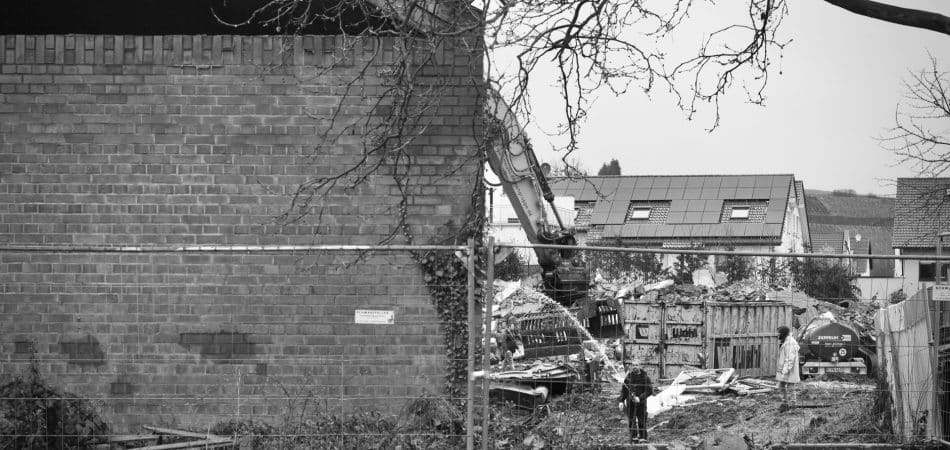
Barns, stables, and other agricultural outbuildings in Louisiana often involve larger spans, heavier timber framing, and legacy materials like corrugated tin and creosote-treated posts that change how a demolition crew approaches the job. Rural lots also raise access questions that suburban teardowns rarely face, from soft ground to long driveways that limit equipment size. Landowners get the best results by having a structure assessed for hazardous material and structural condition before any teardown date is set.
A leaning barn or a collapsed stable is a different animal than a suburban garage teardown. These structures were often built decades ago with heavy timber framing, and many carry legacy materials that a modern crew has to plan around before the first beam comes down. Landowners in the parishes surrounding New Orleans, from rural stretches near Hammond to farm parcels outside Covington, ask similar questions when a barn has outlived its usefulness or become a safety hazard.
Post-and-beam construction common in older barns distributes weight differently than a stick-framed house, which changes how a structure behaves once support columns are cut or pulled. A large hay barn or equipment shed can span 40 feet or more without interior walls, meaning the roof structure has to be brought down in a sequence that avoids an uncontrolled collapse toward equipment, fencing, or a neighboring structure. Heavy timber also does not break down the way dimensional lumber does, so demolition crews plan differently for loadout and hauling volume.
A visit to the TurnKey Demo Team homepage outlines the broader range of demolition work the company handles beyond typical residential and commercial teardowns, including these larger rural and agricultural jobs.
Older barns frequently contain creosote-treated fence posts and beams, corrugated tin roofing that may include asbestos-cement panels, and lead paint on trim from decades of repainting. None of these are unusual to find, but each one changes the disposal path and sometimes the removal sequence. Loose hay, feed, and years of accumulated debris inside a barn also need clearing before structural demolition starts, which is a step many landowners underestimate.
Livestock waste buildup in stables can create air quality concerns during teardown as well, which is one more reason a walkthrough before scheduling matters more on agricultural sites than on a typical residential lot.
Soft ground, long gravel driveways, and limited turnaround space often dictate smaller or tracked equipment instead of standard wheeled machines. A barn set well back from the road on a working farm may require a different excavator than a demolition crew would bring to a city lot, particularly after Louisiana’s wetter months when unpaved ground softens. Crews familiar with rural sites plan equipment access as part of the estimate rather than discovering the problem on arrival.
Fencing, irrigation lines, and active pastures nearby also mean a demolition plan has to protect infrastructure that isn’t part of the teardown itself, something urban demolition jobs rarely have to consider.

Weathered barn wood, hand-forged hardware, and structural beams often have resale or reuse value that a straight teardown would waste. Reclaimed barn wood is in demand for interior design and furniture work, and landowners can sometimes offset part of the demolition cost by allowing salvage before the structure comes down. This works best when arranged ahead of time, since a rushed teardown for safety reasons leaves less opportunity for careful deconstruction of individual boards and beams.
Readers interested in a broader comparison between salvage-focused removal and standard teardown can review the site’s deconstruction versus demolition guide for more detail on how that decision gets made.
Agricultural structures are sometimes exempt from standard building permits during construction, but demolition permitting still commonly applies depending on the parish. Structures near a property line, a public road, or a floodplain overlay may face additional review even on land zoned agricultural. Landowners should confirm parish-specific rules before scheduling a teardown, since assumptions based on the structure’s original agricultural-exempt status don’t always carry over to demolition.

Ask how the crew handles hazardous roofing material, whether salvage is possible, and how debris gets hauled off a rural site with limited road access. A contractor experienced with agricultural structures should be able to walk a property and identify creosote posts, suspect roofing panels, and structural risk points without guesswork. It also helps to ask about timeline flexibility, since weather has a bigger effect on rural site access than it does on a paved city lot.
A written estimate should spell out whether debris hauling, salvage removal, and any hazardous material testing are included, rather than leaving those as separate line items discovered mid-project.
Louisiana’s wet season and hurricane season both affect scheduling for agricultural demolition more than they do a typical city lot. Unpaved farm roads and pasture ground turn soft after heavy rain, sometimes for days, which can delay equipment mobilization to a site that was accessible the week before. Landowners planning a barn removal around a specific timeline should build in some flexibility for weather delays, particularly during spring and the height of hurricane season from June through November.
Dry fall and winter months tend to offer the most predictable ground conditions for rural equipment access in this part of Louisiana, though a structure that’s become an active safety hazard, like a partially collapsed roof over a walkway or animal pen, shouldn’t wait for ideal weather if the risk is immediate.
Site grading, foundation or footing removal, and sometimes soil testing follow structural demolition, especially if the land will be repurposed for a new structure or returned to active pasture. Old barn foundations, particularly on properties with decades of continuous agricultural use, sometimes include buried footings or partial foundations that aren’t visible until excavation begins. Clearing these fully, rather than leaving them buried, matters if the landowner plans future construction or wants the field usable for equipment and livestock without hidden obstacles.
Site remediation also becomes relevant if the demolished structure housed livestock or stored chemicals like fertilizer or pesticides over the years, since soil condition in those specific areas sometimes needs evaluation before the land returns to regular use.
A single large barn typically takes one to three days depending on size, salvage requests, and ground access. Structures with hazardous roofing material like asbestos-cement panels can take longer due to required abatement steps.
Yes, sometimes only a damaged wing or an unsafe loft needs removal while the rest of the structure remains usable. This requires more careful sequencing than a full teardown to avoid destabilizing the remaining framing.
Creosote-treated lumber is regulated differently than untreated wood and typically cannot go into a standard construction debris landfill in Louisiana. A crew familiar with agricultural structures separates it out for proper disposal.
Interior debris like old feed, bedding, and waste buildup needs clearing before structural work begins, both for air quality and to give the crew clear access to framing. This step is usually quoted separately from the structural teardown itself.
Sometimes, particularly if a barn collapsed or was damaged by a storm event and the policy covers structure removal. It’s worth checking with the insurance carrier before scheduling, since documentation of pre-demolition condition can matter for a claim.
Rural and agricultural teardowns need a different approach than a standard residential job, from equipment access to hazardous material handling. A short site visit gives a clear picture of what’s involved before any work is scheduled.
Contact the team for a walkthrough, or call (504) 732-9194 to discuss a specific property.
 TurnKey Demo Team
  Aug 10, 2026