Residential License # 890459
Commercial License # 3667

Opening Hours 9:00 am to 6:00 pm


Call Us Today!
Residential License # 890459
Commercial License # 3667
Opening Hours 9:00 am to 6:00 pm
Call Us Today!

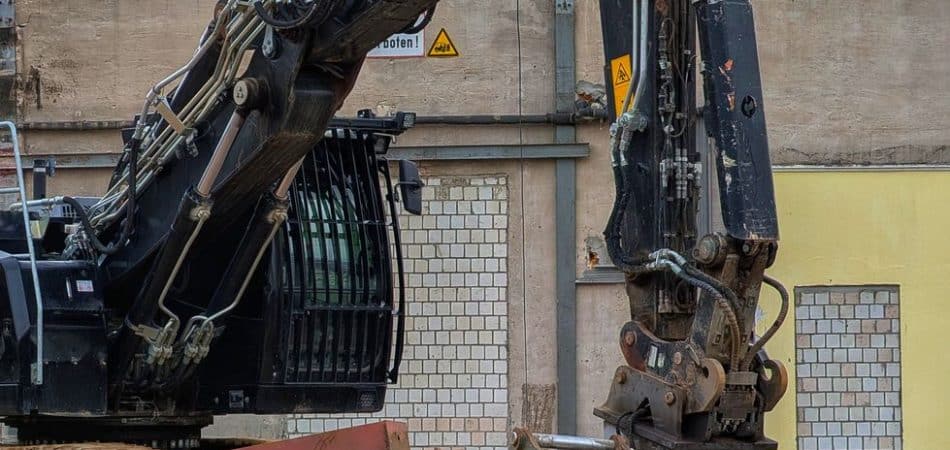
Mini excavators handle tight residential lots and interior demolition support work, standard excavators cover most mid-size commercial teardowns, and long-reach or high-reach excavators are built for tall structures where standard boom length can’t safely reach the top. Choosing the right machine depends on site access, structure height, and the type of material being removed. The wrong equipment choice on a demolition site slows a project down and can create safety problems that better equipment selection avoids.
An excavator is the workhorse of most demolition projects, but not every excavator is built for the same job. A mini excavator that fits through a narrow side yard gate is useless on a five-story commercial teardown, and a high-reach excavator sized for a tall structure would be overkill, and impractical, in a tight residential backyard. Understanding the differences helps property owners follow along with a contractor’s equipment plan and ask informed questions during the estimate process.
Mini excavators, generally under 10 tons, are built for tight-access sites like residential backyards, narrow lots, and interior demolition support where a full-size machine simply won’t fit. These machines trade reach and breaking power for maneuverability, making them the right choice for garage and shed teardowns, small residential slab removal, and site work in confined urban lots common around New Orleans. What a mini excavator loses in raw power, it makes up for in access to spaces a larger machine can’t reach.
Readers weighing a smaller residential project can see how machine sizing plays into
 TurnKey Demo Team
  Aug 27, 2026