Residential License # 890459
Commercial License # 3667

Opening Hours 9:00 am to 6:00 pm


Call Us Today!
Residential License # 890459
Commercial License # 3667
Opening Hours 9:00 am to 6:00 pm
Call Us Today!

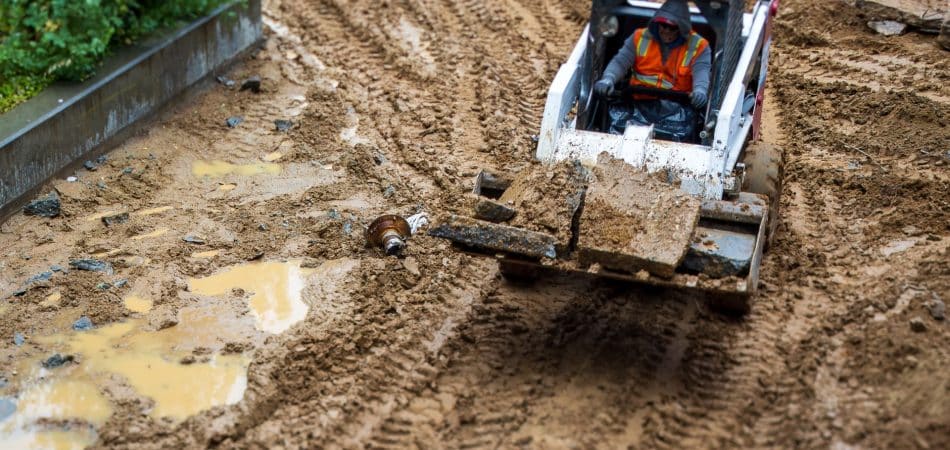
New Orleans sits on soft, water-saturated alluvial soil. The water table often sits just two to five feet below the surface. That combination changes equipment choice, foundation removal, backfill, and drainage planning on nearly every demolition or excavation project here.
Every demolition or excavation project in New Orleans starts with the same variable: the ground itself. New Orleans soil conditions differ sharply from the sand and gravel base found in much of the country. The city sits on soft, river-deposited clay and organic material instead of solid bedrock. That soil, combined with a shallow water table, decides which equipment fits on site and how deep a crew can safely dig. It also determines what has to happen before backfill goes back into the ground. Property owners planning a teardown or a major excavation need to understand these conditions before work begins, not after equipment gets stuck or a trench wall gives way.
TurnKey Demo Team has planned demolition and excavation jobs across New Orleans and the surrounding parishes for years, matching equipment and methods to the soil each site actually has. A quick call sets up a free estimate that accounts for soil type, water table depth, and drainage before the first machine ever shows up.
New Orleans sits mostly on soft alluvial soil deposited by the Mississippi River. Firmer natural levee ground sits near older, higher neighborhoods, while softer backswamp soil fills the lower areas between them. Crews need to know which type they are working with before choosing equipment or planning a dig. The Louisiana Geological Survey classifies natural levee soil as a mix of sandy silt over lean and fat clay, which gives it more bearing capacity than the ground behind it. Backswamp areas, by contrast, formed as slow-moving floodwater dropped fine clay and organic material into low, poorly drained basins.
| Soil Type | Typical Location | Composition | Excavation Impact |
|---|---|---|---|
| Natural levee | Higher ridges near the river and older neighborhoods | Sandy silt over lean and fat clay | Firmer footing, still needs clay-aware equipment |
| Backswamp | Lower areas between levees | Organic peat and soft clay | Weak bearing capacity, prone to rutting and slow settling |
Beneath both soil types lies an older, firmer Pleistocene surface, but it sits too deep to matter for most demolition and excavation scopes. The methods a crew uses to break up a slab often shift based on the soil underneath. That is one reason concrete demolition in New Orleans rarely looks the same from one property to the next.

In much of Greater New Orleans, the water table sits only two to five feet below grade, which means most excavation projects hit groundwater almost as soon as digging starts. That shallow groundwater turns a routine trench into a wet, unstable cut that can slump without warning. Crews plan for excavation work around this from the start, rather than treating water as a surprise to deal with mid-project.
Federal safety rules reflect how serious this risk is. The Occupational Safety and Health Administration requires a protective system for any trench five feet deep or greater, unless it sits entirely in stable rock. New Orleans soil almost never qualifies as stable rock, so shoring, sloping, or a trench box becomes standard practice. Dewatering pumps typically run continuously once a cut goes below the water line, pulling groundwater out faster than it seeps back in.
Yes, and the rate varies by neighborhood. City data tracked between 2002 and 2005 put average subsidence citywide at about 0.2 inches a year, with some areas sinking more than 0.8 inches annually. A 2025 satellite study involving Tulane University researchers found some spots losing up to 47 millimeters, nearly two inches, per year between 2002 and 2020. That uneven sinking matters for any project with a multi-year horizon, because a grade that drains correctly today may sit noticeably lower relative to the street within a few years.
Subsidence rates vary block by block depending on how the land was originally developed, so a site survey matters more in New Orleans than in most cities. Demolition permits for any affected structure still run through the City of New Orleans Department of Safety and Permits. Our guide on demolition permits in New Orleans covers that process in more detail. A short call to a local crew before permitting starts can flag whether a property’s subsidence history should change how the site gets graded after work wraps up.

Soft, wet ground forces crews toward low ground-pressure equipment and trench boxes or sheet piling instead of open sloped cuts. Pumps also run for the length of the job. All of this differs from what a firmer, drier site would need. Standard tracked excavators can sink or rut a backswamp lot badly enough to delay a schedule by days, so equipment selection starts with a soil read, not a spec sheet.
Wide-track or swamp-pad excavators spread weight across more surface area, which keeps machines from sinking into saturated clay. Smaller, lighter attachments also reduce the number of passes a crew needs across sensitive ground.
Trench boxes and steel sheet piling hold back soft trench walls in conditions where sloping alone would eat up too much space or still fail. These same safety standards guide crews on our industrial demolition projects, where deeper excavation is common.
Ready to talk through what your site’s soil and water table mean for your project? A short conversation with a local crew before permitting starts can save real time later.
Many New Orleans structures rest on timber or concrete piles driven down to firmer soil, since shallow ground alone cannot support a building’s weight. Pulling or cutting those piles during demolition is a different task than breaking up a standard slab foundation. Groundwater tends to fill an excavation as a crew works, so pile removal often happens alongside active dewatering rather than in a dry, static pit.
A geotechnical engineer typically weighs in on how deep piles need to be cut or pulled, since leaving material too shallow can create problems for whatever gets built next. Crews coordinate that decision with foundation and slab work the same way they would on a land clearing project in New Orleans, where site conditions drive the sequence of work.
Backfill in New Orleans usually relies on engineered fill material rather than reused native clay, because local clay holds water, swells, and shrinks in ways that undermine compaction over time. Getting this step wrong shows up later as settling, cracked slabs, or standing water near a foundation.
A typical sequence looks like this:
Drainage planning ties directly into this process. Flat, low-lying lots need intentional grading. In some cases, that also means subsurface drainage work handled through site remediation, so water has somewhere to go besides sitting against a foundation.
In much of Greater New Orleans, the water table sits roughly two to five feet below the surface. That shallow depth is why the Mississippi River’s alluvial deposits create wet excavation conditions even during dry weather.
Soft backswamp soil often requires dewatering pumps, trench boxes, and wider equipment, all of which add time and equipment costs compared to firmer ground. A site near the Mississippi River’s natural levee may need less of this support than a lot in a former backswamp basin.
Yes, wide-track or swamp-pad excavators and steel trench shoring are common on soft, saturated sites. The Occupational Safety and Health Administration requires protective systems in trenches five feet deep or greater, which shapes equipment choices citywide.
Subsidence changes long-term grading and drainage planning more than the demolition itself. A 2025 study involving Tulane University found some New Orleans areas losing up to 47 millimeters of elevation a year. That kind of change can affect drainage once work is finished.
The City of New Orleans Department of Safety and Permits handles demolition permits citywide. Soil and water table conditions do not change the permitting process, but they can influence site plans submitted with a permit application.
Yes, timber or concrete piles can be cut or pulled during demolition, though a geotechnical engineer often advises on depth. This differs from removing a standard slab foundation and typically involves active dewatering as work progresses.
Soft alluvial soil and a shallow water table do not have to derail a demolition or excavation timeline when a crew plans for them from the start. The right equipment, dewatering setup, foundation removal method, and drainage plan all trace back to an honest read of the soil beneath a property. TurnKey Demo Team builds each site plan around those conditions instead of applying a one-size-fits-all approach borrowed from firmer ground elsewhere.
Reach out through the contact page or call (504) 732-9194 for a free estimate that takes your property’s soil, water table, and drainage into account from day one.
 TurnKey Demo Team
  Jul 31, 2026