Residential License # 890459
Commercial License # 3667

Opening Hours 9:00 am to 6:00 pm


Call Us Today!
Residential License # 890459
Commercial License # 3667
Opening Hours 9:00 am to 6:00 pm
Call Us Today!

A demolition site can look chaotic to someone watching from the sidewalk, but a well-run crew is anything but random. Every person on site has a defined role, and that structure is what keeps heavy equipment, falling debris, and a moving job site from becoming a safety hazard.
TurnKey Demo Team organizes its crews around clear roles on every New Orleans project, from a small residential teardown to a larger commercial site. For an overview of the type of work these crews handle, visit the demolition services page, or call 504-732-9194 with questions about an upcoming project.
A demolition site involves heavy equipment, falling debris, and constantly changing conditions, so a clear structure with defined roles reduces the chance of miscommunication that could put a crew member or bystander at risk. Unlike a typical construction site building something up, demolition involves controlled destruction, which raises the stakes if communication breaks down.
Every role on a demolition crew exists to manage a specific part of that risk, whether it is operating equipment, directing traffic around the site, or overseeing the overall sequence of work. Understanding these roles gives property owners a clearer picture of what is actually happening on their site during a project.
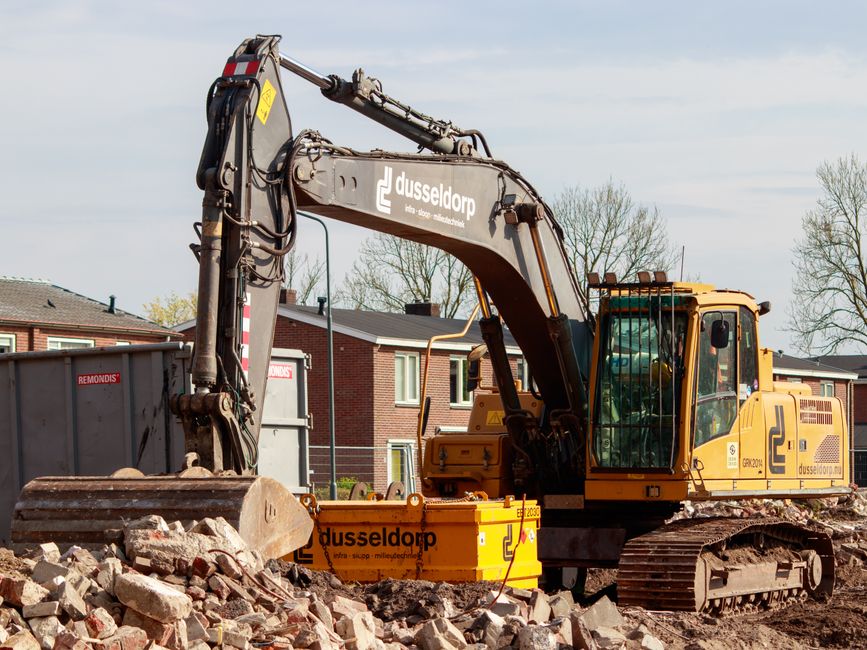
A site supervisor or project lead coordinates the day-to-day work on a demolition site, making decisions about sequencing, communicating with the property owner about progress or issues, and ensuring the crew follows the planned approach. This role is the point of contact for questions that come up during the project.
The supervisor role also involves adjusting plans in real time when conditions change, such as when a scope change is discovered or weather affects the schedule. A property owner with a question about their project’s timeline or a change in scope typically goes through this role rather than trying to communicate directly with equipment operators mid-task.
On larger commercial projects, the supervisor role also coordinates with outside parties, such as a structural engineer reviewing a multi-story sequencing plan or a utility provider handling a disconnection. Keeping that outside coordination centralized through one point of contact reduces the chance of conflicting information reaching different parts of the crew.
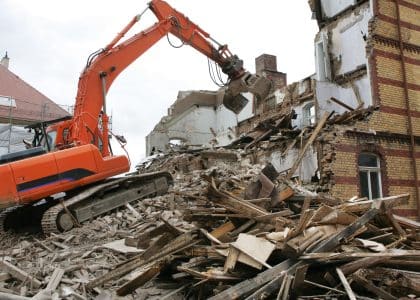
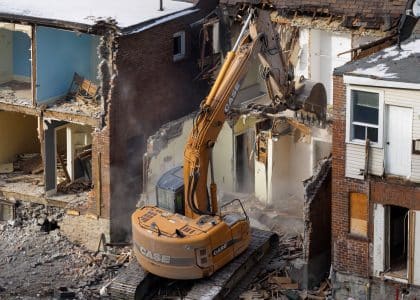
Equipment operators run the excavators, loaders, and other heavy machinery used to physically demolish a structure, and their role requires both technical skill and constant awareness of everyone else working around the machine. Operating heavy equipment near a crumbling structure, other crew members, and sometimes neighboring properties requires more precision than operating the same equipment on an open construction site.
Operators are typically trained on the specific type of equipment they run, and larger or more complex machines, such as high-reach excavators used on multi-story projects, often require additional experience beyond standard equipment operation. A crew’s equipment operators are usually among its most experienced members given the level of precision the work demands.

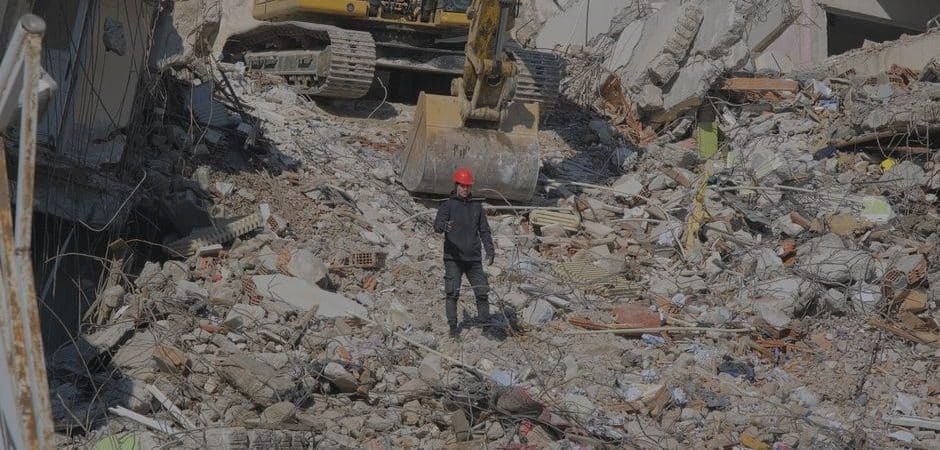
Ground crew members and flaggers manage tasks at ground level, including directing vehicle and pedestrian traffic around the site, maintaining exclusion zones near active equipment, and helping with material handling once debris is on the ground. This role is critical on urban New Orleans job sites where a demolition project often sits close to a sidewalk or active street.
Flaggers in particular play a safety role that is easy to overlook from the outside. Keeping pedestrians and vehicles away from an active work zone, especially when equipment is swinging material or a section of structure is coming down, prevents the kind of close call that a busier city street makes more likely than a rural job site would.
Ground crew also handles a portion of the material handling once debris is broken down and needs to be sorted or loaded for hauling. This part of the job connects directly to how efficiently a site gets cleared, since a ground crew that keeps debris organized as it comes down makes the loading and removal process faster than sorting through a disorganized pile at the end of each day.
A demolition project runs smoothly when the site supervisor, equipment operators, and ground crew communicate constantly throughout the day, since conditions on an active demolition site can change from one hour to the next. A structural element behaving unexpectedly, a change in weather, or a scope change discovered mid-project all require the crew to adjust as a coordinated unit rather than independently.
This coordination is usually built around regular check-ins throughout the day, along with clear protocols for pausing work if a safety concern comes up. A crew that has worked together on multiple projects tends to develop a rhythm that makes this coordination feel routine rather than something that has to be renegotiated on every job.
Understanding who does what on a demolition site helps property owners make sense of what they are watching happen on their property, and it also gives a sense of what to expect when questions come up during a project. A crew with clearly defined roles and consistent communication is generally a sign of a well-run operation.
The company is licensed for residential (License #890459) and commercial (License #3667) demolition throughout New Orleans and the surrounding parishes and structures its crews around these defined roles on every project. Explore the full services list, or reach out through the contact page to discuss your project.
Have questions about how a crew will approach your project? Call 504-732-9194 for a free estimate.
The site supervisor or project lead is typically the main point of contact for property owners during an active project. They coordinate day-to-day work and can answer questions about progress, timeline, or any changes that come up.
Equipment operators generally need training specific to the machinery they run, and larger or more specialized equipment often requires additional experience. Requirements vary depending on the type of equipment and the scope of the project.
Crew size depends heavily on the project’s scope. A small residential teardown might involve just a few people, while a larger commercial or multi-story project requires a bigger team to manage equipment, ground safety, and material handling simultaneously.
Well-run crews have clear protocols for pausing work when a safety concern arises, regardless of role. Any crew member noticing an issue, whether a structural concern or an equipment problem, is expected to flag it immediately rather than waiting for a scheduled check-in.
Demolition work requires more precision than typical construction equipment operation, since operators are working near unstable structures, other crew members, and sometimes neighboring properties. Experienced operators are better equipped to handle unexpected conditions safely.
Clear roles and constant communication between the site supervisor, equipment operators, and ground crew are what keep a New Orleans demolition project safe and on schedule from the first day to the last.
TurnKey Demo Team structures its crews around these defined roles on every project it takes on in the area.
Have questions about how a crew will approach your project? Contact us or call 504-732-9194 for a free estimate.
 TurnKey Demo Team
  Sep 26, 2026