Residential License # 890459
Commercial License # 3667
Opening Hours 9:00 am to 6:00 pm

Call Us Today!
A full residential demolition in New Orleans typically takes 1 to 3 days of active work on the ground, but the total project timeline from first call to final haul-away runs 3 to 6 weeks when you account for permitting, utility disconnections, asbestos inspections, and debris removal. Factors like lot access, structure size, and material type all affect your specific schedule.
If you’re planning to tear down a house in New Orleans and want a realistic picture of what’s ahead, this guide walks through every phase of the process. TurnKey Demo Team handles residential demolitions throughout the Greater New Orleans area, and understanding the timeline upfront saves property owners from surprises and delays.
Demolition isn’t just showing up with an excavator. Before a single wall comes down, a series of required steps must happen in the right order. Skipping any of them can result in permit violations, fines, or unsafe conditions on your property.
This is the phase that catches most homeowners off guard. The City of New Orleans requires a demolition permit before any structure can be torn down, and the permitting process takes time. Depending on the age of the property, the zoning, and whether the home is in a historic district, permit approval can take anywhere from 5 business days to 3 weeks.
Homes built before 1978 require an asbestos and lead paint survey before the permit is issued. If hazardous materials are found, abatement must be completed before demolition begins. This step alone can add 1 to 2 weeks to the schedule. You can read more about the full permitting process in our post on whether you need a demolition permit in New Orleans.
During this pre-work phase, your contractor also coordinates with Entergy, Sewerage and Water Board, Cox, and any other utilities to disconnect services. All utilities must be capped and disconnected before work begins. Utility scheduling is often the biggest wild card in the timeline, as appointments depend on provider availability.
Once permits are in hand and utilities are confirmed disconnected, the crew moves in to prepare the site. This includes removing any fencing or obstructions around the structure, setting up safety barriers, and confirming access for the equipment. In tight New Orleans neighborhoods, maneuvering a full-size excavator requires planning around overhead lines, neighboring structures, and narrow streets.
Interior items that can be salvaged or require separate handling are removed at this stage. If you’re doing a selective interior demolition as part of a renovation rather than a full teardown, site prep is still required but the scope changes significantly.
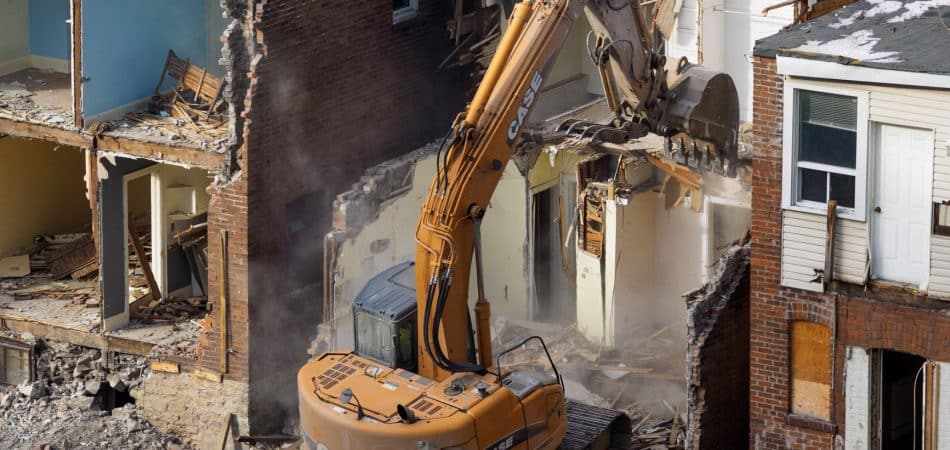
This is the part most people picture when they think about demolition. For a standard single-family home in New Orleans, the actual tear-down takes 1 to 3 days depending on square footage, construction type, and equipment used. A wood-frame shotgun double or camelback might come down in a single day. A larger two-story masonry structure will take longer.
Our team at TurnKey Demo Team’s residential demolition services uses the right equipment for each job, from compact excavators in tight spaces to full-size machines on open lots. The goal is efficient demolition without damaging neighboring properties or underground infrastructure.
Concrete foundations present their own set of considerations. Depending on what the site will be used for next, the slab may be broken up and removed or left in place as fill. Our concrete demolition services cover both scenarios. For a deeper look at how concrete work differs by method, see our breakdown of concrete demolition methods in New Orleans.
Several conditions specific to New Orleans can extend your project timeline beyond the standard estimate.
If you’re weighing whether to tear down versus renovate, the timeline question is part of a bigger decision. Our post comparing tearing down vs. renovating a New Orleans home walks through the cost and timeline tradeoffs in detail.
Once the structure is down, the debris must be hauled away and the site graded. This phase is often underestimated. A standard home generates a significant volume of material, and multiple dump runs may be required. The lot then needs to be leveled to meet city grading requirements and prepare for whatever comes next, whether that’s new construction, a slab pour, or landscaping.
Final site cleanup and any required backfill typically add 1 to 2 days after the main haul is complete. The lot should be left clean, level, and erosion-controlled where required.
| Phase | Estimated Duration |
|---|---|
| Permitting and utility disconnect | 1 to 3 weeks |
| Asbestos/lead survey and abatement (if needed) | 1 to 2 weeks (additional) |
| Site preparation | 1 to 2 days |
| Active demolition | 1 to 3 days |
| Debris removal and grading | 1 to 3 days |
| Total (typical range) | 3 to 6 weeks |
The best way to get an accurate timeline for your specific property is to have a contractor walk the site before you commit to a schedule. Property conditions, structure type, and local permit requirements all affect how long your project will realistically take. Starting the permitting process early is the single most effective way to keep your overall timeline on track.
To learn more about what residential demolition costs in this market, see our detailed breakdown of residential demolition costs in New Orleans for 2026.
Call TurnKey Demo Team at (504) 732-9194 or visit our contact page to schedule a site assessment. We’ll give you a straight answer on what your project involves and how long it will take.
The active tear-down of a standard single-family home takes 1 to 3 days on the ground. Including permits, utility disconnections, and debris removal, the full project typically runs 3 to 6 weeks from start to finish.
Permit approval typically takes 5 business days to 3 weeks depending on the property’s age, zoning, and location. Historic district properties require additional review that can extend this phase further.
Yes. If a pre-demolition asbestos survey finds hazardous materials, licensed abatement must be completed before demolition can begin. This adds 1 to 2 weeks to the overall schedule in most cases.
The slab can either be broken up and removed or left in place depending on your plans for the lot. Your contractor should clarify this during the planning phase since it affects both cost and timeline.
Yes. Heavy rain, tropical storms, and extreme heat are common in New Orleans and can pause work during the active demolition and cleanup phases. Summer scheduling should account for afternoon weather delays.
Start by contacting a licensed demolition contractor to assess your site and begin the permitting process. The earlier you initiate permitting, the less wait time you’ll have before work can begin on the ground.