Residential License # 890459
Commercial License # 3667

Opening Hours 9:00 am to 6:00 pm


Call Us Today!
Residential License # 890459
Commercial License # 3667
Opening Hours 9:00 am to 6:00 pm
Call Us Today!

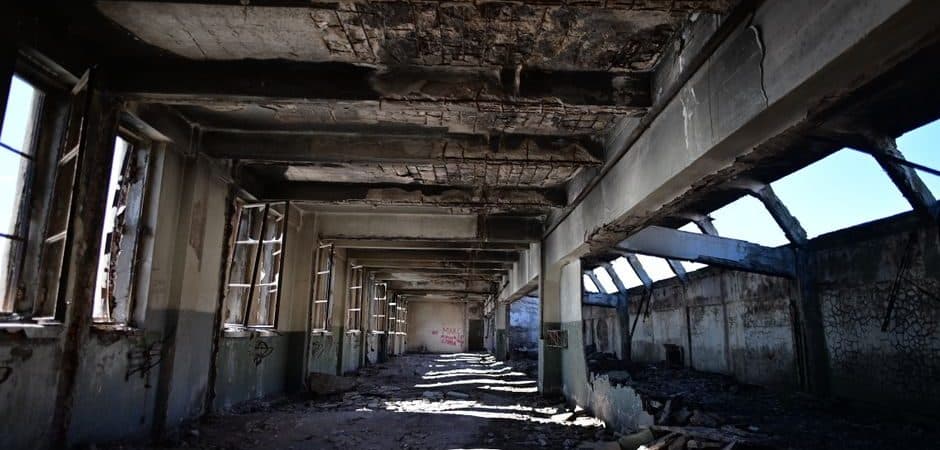
A restaurant closing down or changing hands rarely means a simple gut job. Commercial kitchens are built around systems that a typical residential demolition never touches: grease traps buried under the floor, exhaust hoods tied into fire suppression, and equipment that has to be disconnected and removed in a specific order to avoid a code violation.
TurnKey Demo Team handles commercial demolition projects throughout New Orleans, including restaurant and kitchen buildouts where these systems come into play. If you are planning a restaurant renovation or teardown, the team’s commercial demolition page covers the broader process, or you can call 504-732-9194 to discuss a specific space.
A restaurant demolition involves specialized systems, including grease traps, exhaust hoods, walk-in coolers, and gas lines, that require different handling and sometimes separate permitting than a standard office or retail demolition. These systems are regulated by health and fire codes in addition to standard building code, which adds steps a typical commercial teardown does not require.
Kitchen equipment also tends to have resale or salvage value that other commercial fixtures do not. Ovens, refrigeration units, and stainless steel prep tables are often removed carefully rather than demolished in place, either for resale, reuse in a new buildout, or proper disposal through channels that handle commercial appliances.
Flooring in a commercial kitchen also gets more attention than in most demolition projects. Quarry tile and other slip-resistant kitchen flooring is often set in a thick mortar bed, and removing it can be more labor intensive than pulling up standard tile or vinyl found in a retail or office space. Crews familiar with restaurant work plan extra time for this step rather than treating it like a standard flooring teardown.
Grease traps and interceptors, which capture fat and food waste before it reaches the sewer system, have to be pumped out and cleaned by a licensed service before removal, since they cannot simply be demolished while still containing waste. Depending on the type, a grease trap may be located under the kitchen floor, requiring excavation to access it, or in a smaller under-sink unit that is easier to remove.
Local sewer and water authorities in New Orleans regulate grease interceptors, and removing or disconnecting one typically requires coordination with the utility provider, separate from the demolition permit for the structure itself. A contractor familiar with restaurant projects builds this coordination into the project timeline rather than discovering the requirement partway through.
Commercial kitchen exhaust hoods are tied into fire suppression systems and ductwork that runs through the ceiling or roof, so removal typically requires disconnecting the fire suppression components first, then the hood and connected ductwork. This sequencing matters because a hood removed incorrectly can leave suppression system components in an unsafe state.
Fire suppression systems in commercial kitchens are inspected and certified separately from the building itself, and a contractor removing one needs to coordinate with whoever holds that certification, particularly if the space will later be reopened as a different restaurant with a new suppression system. Skipping this coordination can create issues for whoever takes over the space next.

Walk-in coolers and refrigeration units contain refrigerant that has to be recovered by a certified technician before the unit is disconnected, since venting refrigerant directly is regulated under federal environmental law. This step happens before demolition crews take the unit apart or remove it from the space.
Once refrigerant is recovered, the physical structure of a walk-in cooler, insulated panels, compressor units, and shelving, can be disassembled and removed like other commercial equipment. Some of these units have resale value on the used restaurant equipment market, which is worth discussing with a contractor if the goal is to recover some cost from a teardown.
A commercial kitchen space that will reopen as a new restaurant often needs a health department inspection or new permit before operating, which means the demolition and any related buildout prep should account for what the next tenant or new health inspection will require. This is different from a standard commercial demolition where the space might sit empty or be repurposed for a different use entirely.
Property owners planning to lease a former restaurant space to a new operator benefit from thinking through what condition the space needs to be in, not just for the demolition to be complete, but for the next tenant’s own permitting process to go smoothly. A contractor experienced in restaurant work can flag these considerations early rather than leaving them for the new tenant to sort out later.
Timing also matters for landlords trying to fill a vacant restaurant space quickly. A demolition scoped correctly from the start, one that removes what needs to go while leaving intact the systems a new tenant can reasonably reuse, gives a property a better shot at attracting an operator without requiring a full rebuild of every kitchen system from scratch.
Commercial kitchen demolition carries more regulatory steps than most people expect walking into a project, largely because a kitchen is built around systems tied to health, fire, and environmental code. A contractor who understands those systems keeps a restaurant teardown from turning into a compliance headache down the line.
The company is licensed for commercial demolition (License #3667) throughout New Orleans and the surrounding parishes and has handled restaurant and commercial kitchen projects as part of its broader commercial work. Browse the full services list, or reach out through the contact page to discuss a restaurant space.
Planning a restaurant renovation or teardown? Call 504-732-9194 for a free estimate.
Removing or disconnecting a grease trap or interceptor typically requires coordination with the local sewer and water authority, separate from the standard demolition permit for the structure. A contractor experienced in restaurant projects can confirm what applies to your specific space.
Often, yes. Ovens, refrigeration units, prep tables, and other commercial equipment frequently have resale value on the used restaurant equipment market, and many contractors will remove these items carefully for resale or reuse rather than demolishing them in place.
Refrigerant recovery must be performed by a certified technician before a walk-in cooler or refrigeration unit is disassembled, since venting refrigerant directly is regulated under federal environmental law. This step happens before demolition crews begin removing the physical unit.
Yes, in most cases. Fire suppression systems in commercial kitchens are certified separately from the building, and removing a connected exhaust hood typically requires coordination with whoever holds that certification, especially if the space will reopen with a new system.
Timelines vary based on the size of the kitchen and the number of specialized systems involved, such as grease traps, hoods, and refrigeration. A straightforward kitchen teardown might take a few days, while a space with more complex systems or health department coordination can take longer.
A commercial kitchen demolition handled with the right sequencing, grease trap coordination, and fire suppression awareness sets a New Orleans property up for a smoother reopening or lease-up, without leaving compliance issues for the next tenant to untangle.
TurnKey Demo Team has handled restaurant and commercial kitchen projects as part of its broader commercial demolition work across the area.
Planning a restaurant renovation or teardown? Contact us or call 504-732-9194 for a free estimate.
 TurnKey Demo Team
  Sep 18, 2026