Residential License # 890459
Commercial License # 3667

Opening Hours 9:00 am to 6:00 pm


Call Us Today!
Residential License # 890459
Commercial License # 3667
Opening Hours 9:00 am to 6:00 pm
Call Us Today!

Concrete demolition involves specialized methods and equipment to break, remove, and dispose of concrete structures safely and efficiently. New Orleans property owners dealing with old foundations, driveways, parking lots, or structural concrete need to understand the options available and what each method involves.

Concrete is one of the most durable building materials used in construction, and that durability is exactly what makes it challenging to remove. At TurnKey Demo Team, we handle concrete demolition projects across the New Orleans metro area, from residential slab removal to large-scale commercial and industrial concrete structures. Each project requires the right method based on the type, thickness, reinforcement, and location of the concrete being removed.
New Orleans presents unique concrete demolition challenges. The region’s high water table, soft soils, and mix of old and new construction mean that concrete conditions vary significantly from one property to the next. A 1950s-era driveway in Gentilly is a very different demolition job than a reinforced foundation in the Central Business District. Understanding the available methods helps you work with your contractor to select the most efficient and cost-effective approach.
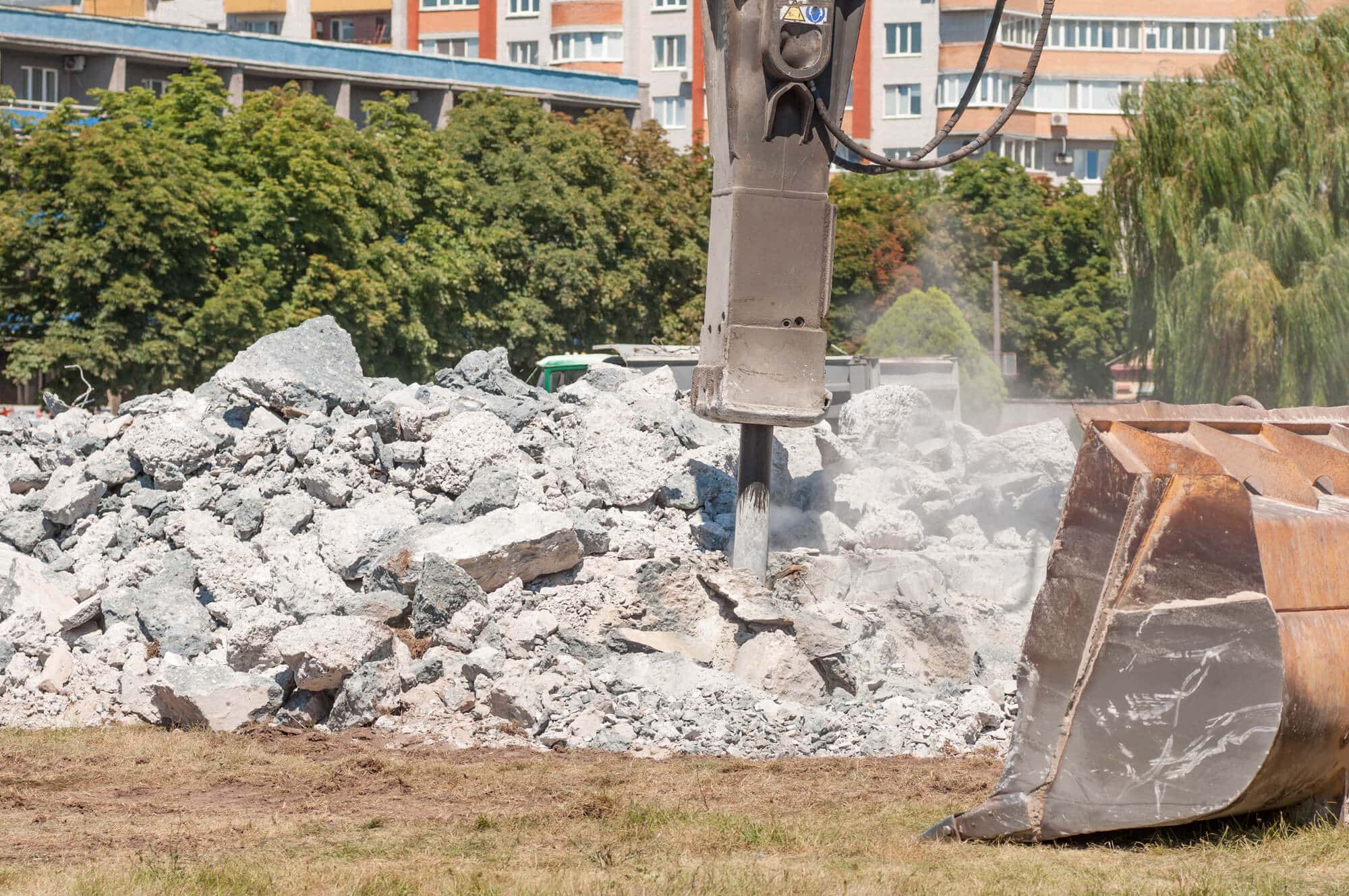
Mechanical demolition using heavy equipment is the primary method for most concrete demolition projects in the New Orleans area. Excavators equipped with hydraulic breakers (also called jackhammers or hoe rams) deliver powerful, repeated impacts that fracture concrete into manageable pieces. For reinforced concrete, hydraulic shears or processors cut through rebar and mesh after the concrete is broken.
This method is efficient for large-volume concrete removal, including foundations, parking structures, retaining walls, and commercial slabs. The equipment can be scaled to match the project, from compact excavators for residential driveways to large machines for industrial-scale concrete. Mechanical demolition is fast, predictable, and well-suited to most conditions found throughout the Greater New Orleans area.
When precision is required, diamond saw cutting provides clean, controlled cuts through concrete of any thickness. Concrete saws use diamond-impregnated blades cooled by water to cut through slabs, walls, and structural elements with minimal vibration and dust. This method is ideal when you need to remove a specific section of concrete without disturbing adjacent areas.
Common applications include cutting expansion joints for partial slab removal, creating openings in existing concrete walls or floors, removing damaged sections of sidewalks or driveways while preserving the rest, and cutting concrete for utility trenching. Sawcutting is often used in combination with mechanical breaking. The saw creates controlled boundaries, and the breaker removes the concrete within those boundaries. This is particularly useful in renovation projects where interior demolition may require removing a concrete floor section without damaging surrounding structures.
In situations where vibration and noise must be minimized, hydraulic splitting offers a quieter alternative to jackhammering. Hydraulic splitters are inserted into pre-drilled holes in the concrete and expanded with enormous force, fracturing the concrete along controlled lines. This method produces minimal noise, dust, and vibration, making it suitable for work near sensitive structures, occupied buildings, or in noise-restricted areas.
Chemical expansion agents are another non-impact option. A chemical compound is mixed and poured into drilled holes, where it expands over 12 to 24 hours and fractures the concrete. While slower than mechanical methods, chemical expansion is virtually silent and vibration-free. This can be useful in historic districts or near structures that could be damaged by vibration.
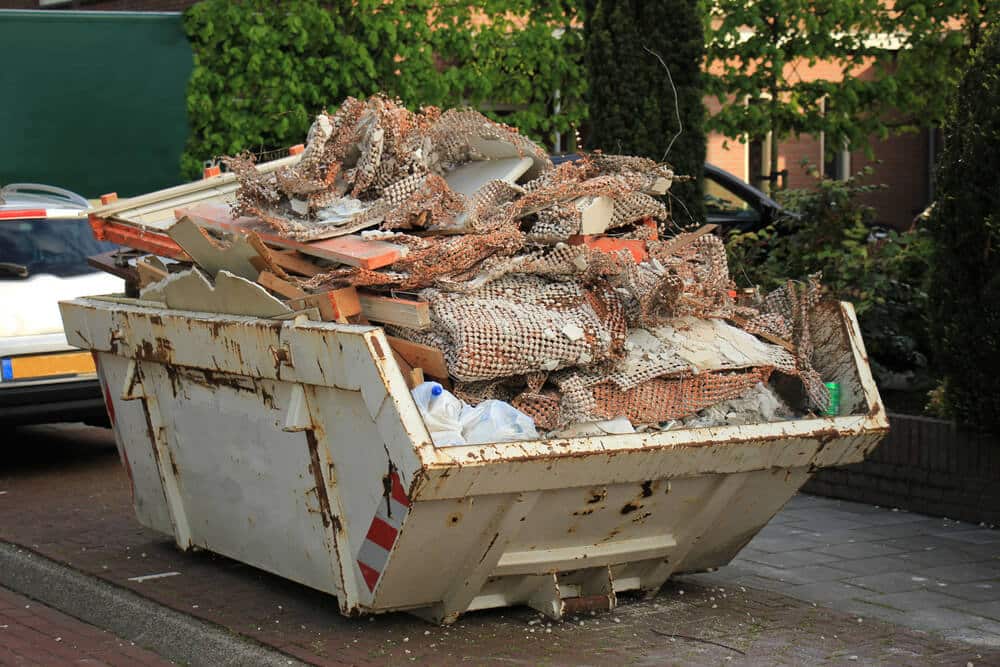
Concrete does not have to end up in a landfill. Portable crushing equipment can process demolished concrete on site, turning it into crushed aggregate that can be reused for road base, fill material, or drainage applications. On-site crushing reduces hauling costs and disposal fees while keeping usable material on your property.
For large projects generating significant volumes of concrete debris, on-site recycling can provide meaningful cost savings. This is common in commercial and industrial demolition projects where thousands of cubic yards of concrete are removed. Even for smaller residential projects, recycled concrete can serve as base material for a new driveway or parking area. Our concrete removal team handles the logistics of crushing and material management.
The best concrete demolition method depends on several factors. Consider the volume of concrete to be removed, as larger volumes favor mechanical demolition for speed. Reinforcement type matters because heavily reinforced concrete requires hydraulic processors or shears. Proximity to other structures may dictate lower-vibration methods. Access limitations in tight residential lots may require smaller equipment. Budget constraints and timeline also play a role in method selection.
Your contractor should evaluate these factors during the site assessment and recommend the most appropriate method or combination of methods. At TurnKey Demo Team, we often use multiple techniques on a single project to handle different concrete types and conditions efficiently.
New Orleans properties face concrete conditions that contractors in other regions may not encounter. Subsidence and settling cause older concrete to crack, tilt, and become uneven, complicating removal. The high water table means that below-grade concrete, such as basement slabs and cisterns, may have water intrusion issues during removal. Older properties may have concrete containing outdated materials or mixed with brick, shell, or other regional construction materials. Our team understands these local conditions and adjusts our approach accordingly. For more on how we handle these regional factors, read about the difference between concrete demolition and concrete removal.
Contact TurnKey Demo Team or call (504) 732-9194 to schedule a site assessment for your concrete demolition project. Whether it is a residential driveway, a commercial parking lot, or an industrial foundation, we will evaluate your concrete and recommend the most efficient approach.
If your concrete work is part of a larger demolition project, explore our commercial demolition process overview or learn about residential demolition pricing for full-structure teardowns. Also review our industrial demolition guide if your project involves heavy infrastructure.
Mechanical demolition using excavators with hydraulic breakers is the fastest method for most concrete removal projects. A skilled operator with the right equipment can break and remove several hundred square feet of concrete slab in a single day, depending on thickness and reinforcement.
Yes. Hydraulic splitting and chemical expansion agents can fracture concrete without heavy machinery. These methods are slower but produce less noise and vibration. They are useful in confined spaces, near sensitive structures, or in areas with restricted equipment access.
Concrete demolition costs in the New Orleans area typically range from $2 to $6 per square foot for standard slabs. Reinforced concrete, thick foundations, and below-grade structures cost more. The total price also depends on debris hauling and disposal fees.
Demolished concrete is either hauled to a disposal facility or crushed on site for recycling. Recycled concrete aggregate is commonly reused as road base, fill, or drainage material. Recycling reduces landfill waste and can lower overall project costs.
Permit requirements depend on the scope. Removing a residential driveway may not require a permit, but foundation removal, structural concrete demolition, or work that affects utilities or drainage typically does. Your contractor should verify requirements with the City of New Orleans.
A site assessment by an experienced contractor is the best way to determine the right method. Factors including concrete thickness, reinforcement type, proximity to other structures, access, and project timeline all influence which method or combination of methods is most appropriate.
 TurnKey Demo Team
  Jun 18, 2026