Residential License # 890459
Commercial License # 3667

Opening Hours 9:00 am to 6:00 pm


Call Us Today!
Residential License # 890459
Commercial License # 3667
Opening Hours 9:00 am to 6:00 pm
Call Us Today!

Industrial demolition requires specialized planning, equipment, and safety protocols that go well beyond standard residential or commercial teardowns. For New Orleans facility owners, understanding these differences is essential to budgeting accurately, maintaining regulatory compliance, and keeping workers and the surrounding community safe.
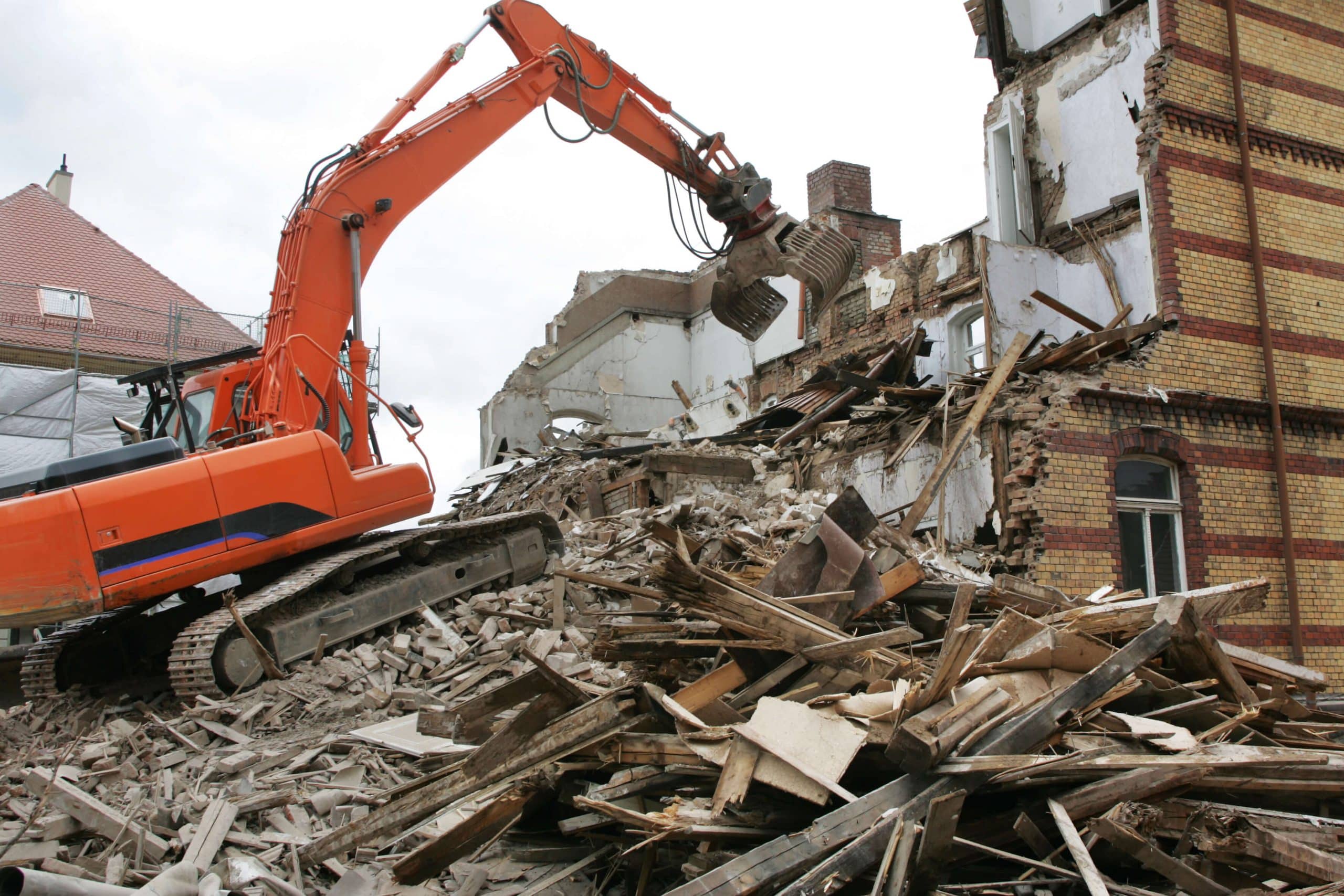
When most people think of demolition, they picture a house or a small commercial building being torn down. Industrial demolition is a fundamentally different type of work. At TurnKey Demo Team, we work with facility owners, plant managers, and industrial property holders across the New Orleans metro area to safely dismantle structures that require a much higher level of expertise and planning.
Industrial sites include manufacturing plants, refineries, chemical processing facilities, power generation stations, warehouses with heavy infrastructure, and port-related structures. These properties often contain reinforced steel, heavy concrete, specialized piping systems, and hazardous materials that demand careful handling. Our industrial demolition services are specifically designed for these complex environments.
One of the biggest differentiators of industrial demolition is the presence of hazardous and regulated materials. Industrial facilities in New Orleans, particularly those along the Mississippi River industrial corridor, commonly contain asbestos insulation, lead-based coatings, chemical residues, mercury-containing equipment, PCBs in older electrical systems, and petroleum-contaminated soils.
Federal EPA regulations, Louisiana DEQ requirements, and OSHA standards all govern how these materials must be identified, handled, and disposed of. Before any demolition begins, a comprehensive environmental site assessment is mandatory. This assessment determines what hazardous materials are present and establishes the abatement and disposal plan. Our hazardous material removal team is trained and licensed for this critical work.
Following abatement, site remediation may also be required to address contaminated soil or groundwater before the property can be redeveloped or sold. This is especially common at former fuel storage sites and chemical processing locations throughout the New Orleans industrial corridor.
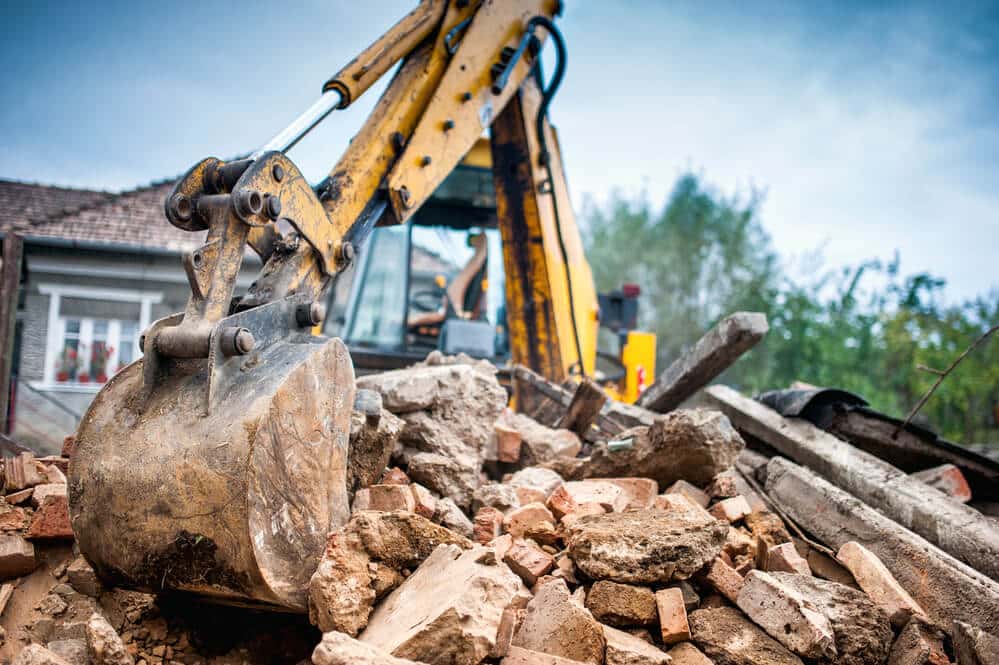
Industrial structures are built heavier and stronger than residential or commercial buildings. Demolishing a reinforced concrete processing tower or a steel-framed warehouse requires equipment and techniques that go beyond standard excavators. High-reach demolition excavators with 60- to 100-foot boom extensions are used for tall structures. Specialized hydraulic shears cut through heavy steel beams and columns. Concrete crushers and pulverizers process reinforced concrete on site.
In some cases, controlled explosive demolition (implosion) is used for very large industrial structures, though this is less common in the New Orleans area due to proximity concerns. More frequently, industrial demolition relies on sequential mechanical dismantlement, working from the top of the structure downward in a planned sequence that maintains structural stability throughout the process.
Industrial demolition carries higher inherent risks than other types of demolition work. Taller structures, heavier materials, and the potential presence of stored energy systems (pressurized vessels, electrical systems, chemical tanks) all demand rigorous safety protocols. Every industrial demolition project requires a site-specific safety plan that addresses fall protection, structural collapse prevention, hazardous atmosphere monitoring, heavy equipment operation zones, emergency response procedures, and worker health monitoring.
OSHA 29 CFR 1926 Subpart T governs demolition safety requirements, and industrial projects often involve additional OSHA standards related to confined spaces, hazardous materials, and crane operations. To learn more about how safety standards protect everyone on a job site, read our detailed article on safety standards behind industrial demolition projects in New Orleans.

Industrial demolition permitting in New Orleans goes beyond the standard demolition permit. Depending on the facility type and location, you may need air quality permits from the Louisiana DEQ, stormwater discharge permits, notifications to the EPA if regulated substances are involved, Army Corps of Engineers permits for waterfront properties, and coordination with the Port of New Orleans for properties in port-adjacent areas.
The permitting timeline for industrial projects is typically longer than for commercial or residential demolition. Plan for four to twelve weeks for the permitting phase alone, depending on the complexity of your facility and the agencies involved.
Industrial demolition costs are driven by several factors that do not apply to smaller projects. The volume and type of hazardous materials requiring abatement often represent the largest variable cost. The height and structural complexity of the facility determines equipment needs and project duration. Disposal of industrial debris, particularly contaminated materials, can be significantly more expensive than standard construction debris. Specialized labor, including certified hazmat workers and experienced heavy equipment operators, commands premium rates.
Industrial demolition projects in New Orleans can range from $50,000 for a small warehouse to several million dollars for a large processing facility. Accurate cost estimation requires a detailed site assessment. For a comparison of how residential projects are priced, see our residential demolition cost guide.
Industrial demolition projects generally take longer than commercial or residential jobs. A typical timeline includes two to four weeks for initial assessment and planning, four to twelve weeks for permitting and regulatory approvals, two to eight weeks for hazardous material abatement, four to sixteen weeks for demolition execution, and two to four weeks for site clearing and remediation. The total duration depends heavily on the facility size, contamination levels, and regulatory complexity.
If you own or manage an industrial facility in the New Orleans area that needs to be demolished, the most important first step is engaging an experienced contractor early. Early engagement allows time for proper assessment, permitting, and planning, all of which reduce risk and help control costs.
Contact TurnKey Demo Team to schedule a site assessment, or call us at (504) 732-9194. We bring the expertise, equipment, and regulatory knowledge that industrial demolition demands. For related topics, read about the commercial demolition process or explore how concrete demolition compares to concrete removal for industrial applications.
Industrial demolition covers manufacturing plants, chemical processing facilities, refineries, power stations, large warehouses, port infrastructure, and similar heavy-use structures. Each type requires specialized planning based on its construction, contents, and environmental profile.
Industrial demolition involves larger and more heavily built structures, a higher likelihood of hazardous materials, more complex permitting requirements, and specialized heavy equipment. The safety protocols and regulatory oversight are significantly more extensive than for standard commercial projects.
Louisiana DEQ regulates air quality, waste disposal, and water discharge during industrial demolition. Federal EPA regulations may also apply if regulated substances like asbestos, PCBs, or petroleum products are present. Compliance is mandatory and non-negotiable.
Industrial demolition timelines vary widely based on facility size and complexity. Small industrial buildings may take two to three months from start to finish. Large facilities with significant environmental concerns can take six months to over a year to complete all phases.
Yes. Steel, copper, aluminum, and other metals are commonly recycled from industrial demolition sites. Clean concrete can be crushed and reused as aggregate. Recycling reduces disposal costs and environmental impact, and the revenue from scrap metal can offset a portion of project costs.
Contact an experienced industrial demolition contractor for a site assessment. This initial evaluation identifies the scope of work, potential hazardous materials, permitting requirements, and provides the basis for an accurate cost estimate. Early planning is critical for industrial projects.
 TurnKey Demo Team
  Jun 18, 2026