Residential License # 890459
Commercial License # 3667

Opening Hours 9:00 am to 6:00 pm


Call Us Today!
Residential License # 890459
Commercial License # 3667
Opening Hours 9:00 am to 6:00 pm
Call Us Today!

Concrete demolition and concrete removal are related but distinct services that address different project needs. Understanding the difference helps New Orleans property owners request the right service, get accurate estimates, and ensure their project is handled with the correct equipment and approach.
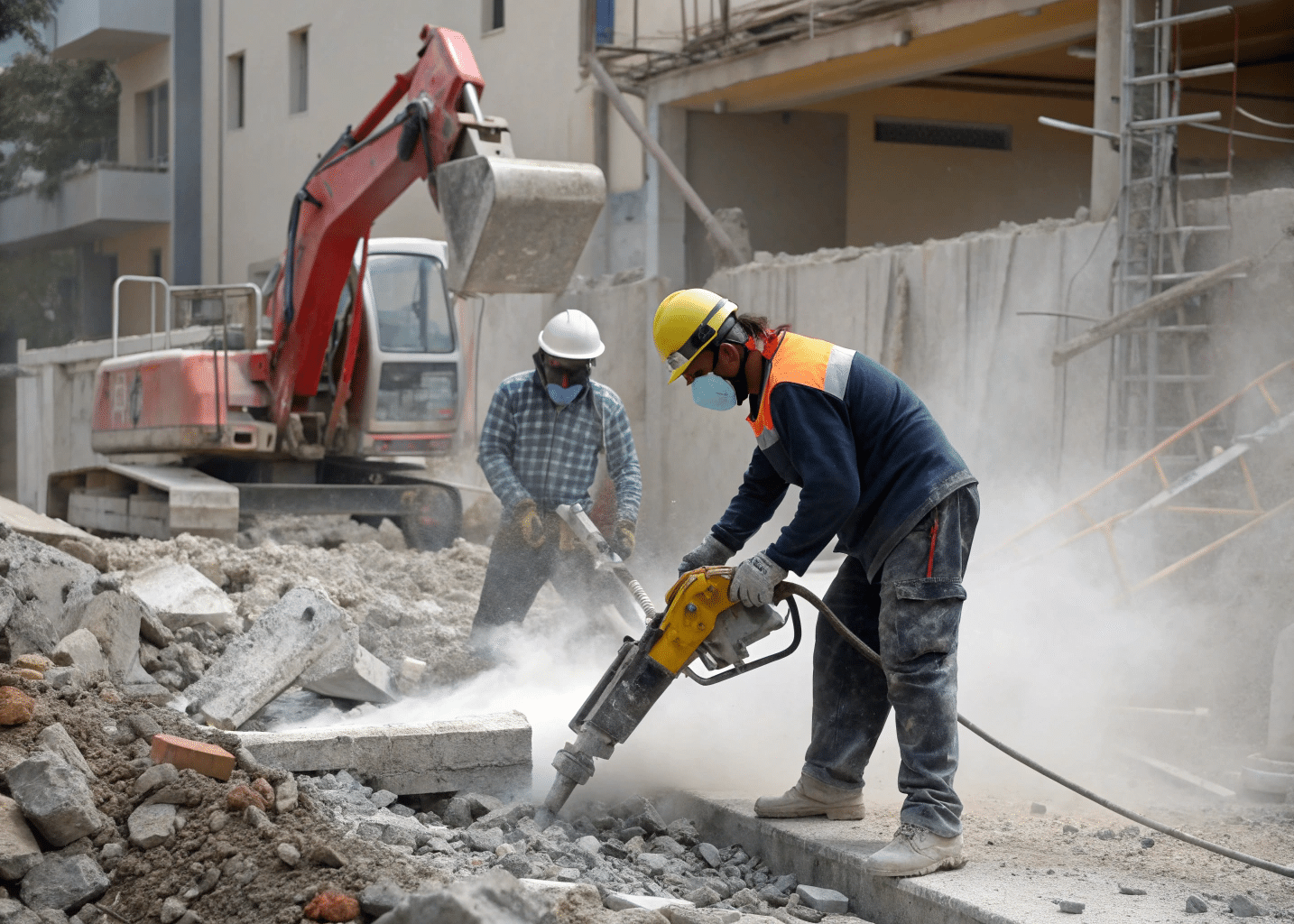
Property owners often use “concrete demolition” and “concrete removal” interchangeably, but in the demolition industry, these terms refer to different scopes of work. At TurnKey Demo Team, we provide both concrete demolition and concrete removal services across the New Orleans area. Knowing which service you need ensures you get the right solution for your project.
The short version: concrete demolition is the process of breaking concrete structures apart. Concrete removal is the process of hauling the broken concrete away from your property. Most projects involve both, but they are distinct phases that can have different cost structures and logistics. Some projects may need only removal (when concrete is already broken), while others require the full demolition-to-removal process.
Concrete demolition is the active process of fracturing, cutting, or otherwise breaking concrete structures. This includes breaking up foundations, slabs, walls, footings, driveways, parking lots, and any other concrete element that needs to be destroyed. The work requires specialized equipment such as hydraulic breakers, concrete crushers, diamond saws, and in some cases, controlled blasting or chemical expansion agents.
The demolition phase is where most of the technical expertise comes into play. Crews must understand the concrete’s thickness, reinforcement pattern, and structural role before breaking it. Reinforced concrete with heavy rebar requires different equipment and techniques than an unreinforced residential slab. The sequence of breaking matters, especially when demolishing structural concrete that supports other building elements.
For a deeper look at the specific techniques used, read our complete guide on concrete demolition methods for New Orleans property owners. That article covers mechanical breaking, sawcutting, hydraulic splitting, and other methods in detail.
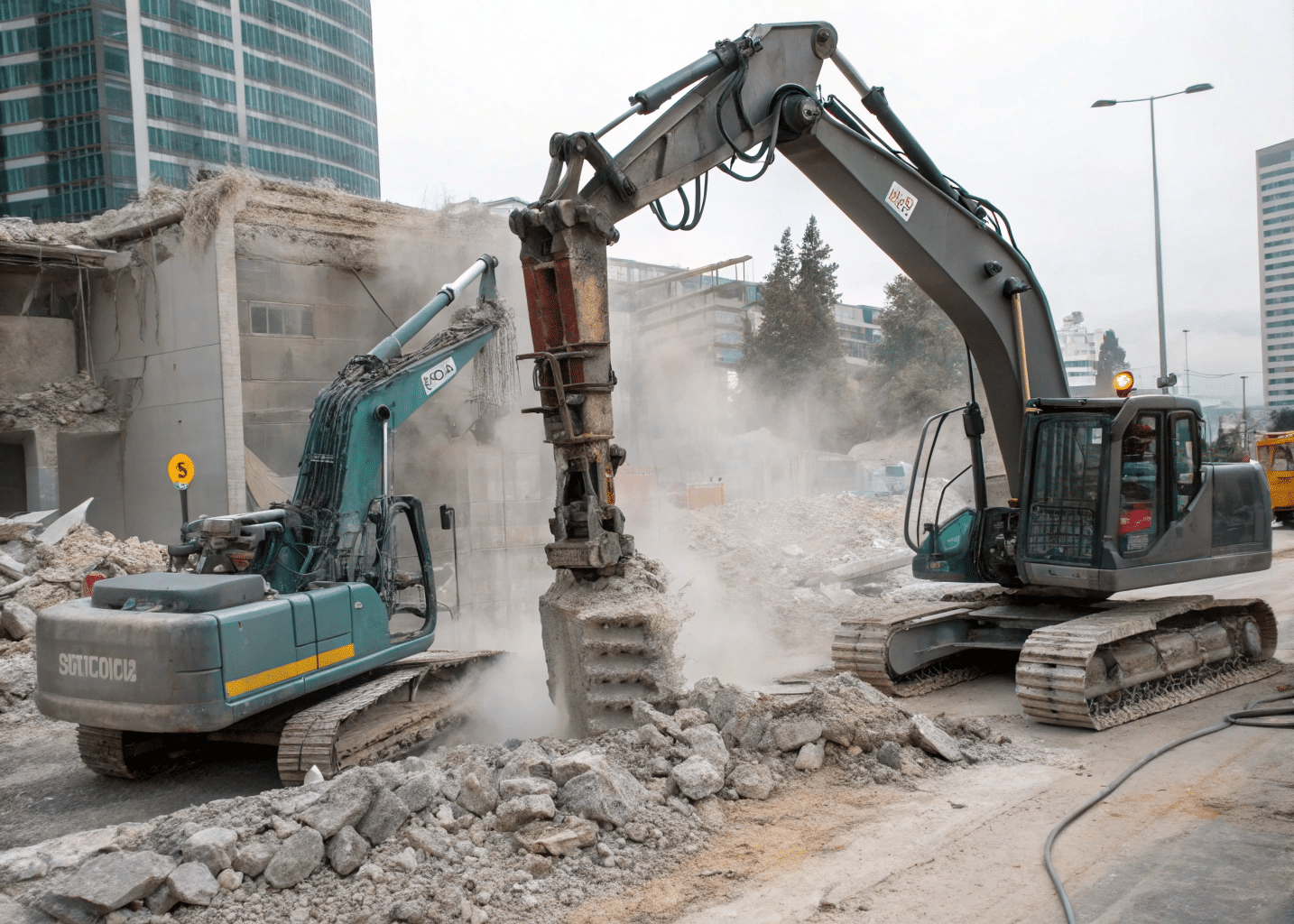
Concrete removal is the process of loading, transporting, and disposing of concrete material after it has been demolished or broken. This phase involves loading broken concrete into trucks or containers using excavators, skid steers, or front-end loaders, transporting the material to a disposal or recycling facility, and paying disposal or tipping fees based on weight or volume.
Removal also includes the physical act of lifting broken concrete pieces out of their original location. For below-grade concrete like basement slabs or underground cisterns, removal means extracting heavy material from below ground level, which requires specific equipment positioning and lifting capability.
In some cases, concrete can be crushed and recycled on site rather than hauled away. Portable crushers process demolished concrete into aggregate that can be reused as road base, fill, or drainage material. This option reduces hauling costs and disposal fees while keeping usable material on the property. Our debris removal team handles the logistics of both off-site disposal and on-site recycling.
There are situations where concrete needs to be demolished (broken) but not removed from the site. Breaking up a concrete slab in place and leaving the pieces as fill or base material is one example. This approach is sometimes used when a property owner plans to build directly over the demolished concrete, using the broken pieces as compactable fill. It is less common in New Orleans due to soil and drainage conditions, but it is an option in certain circumstances.
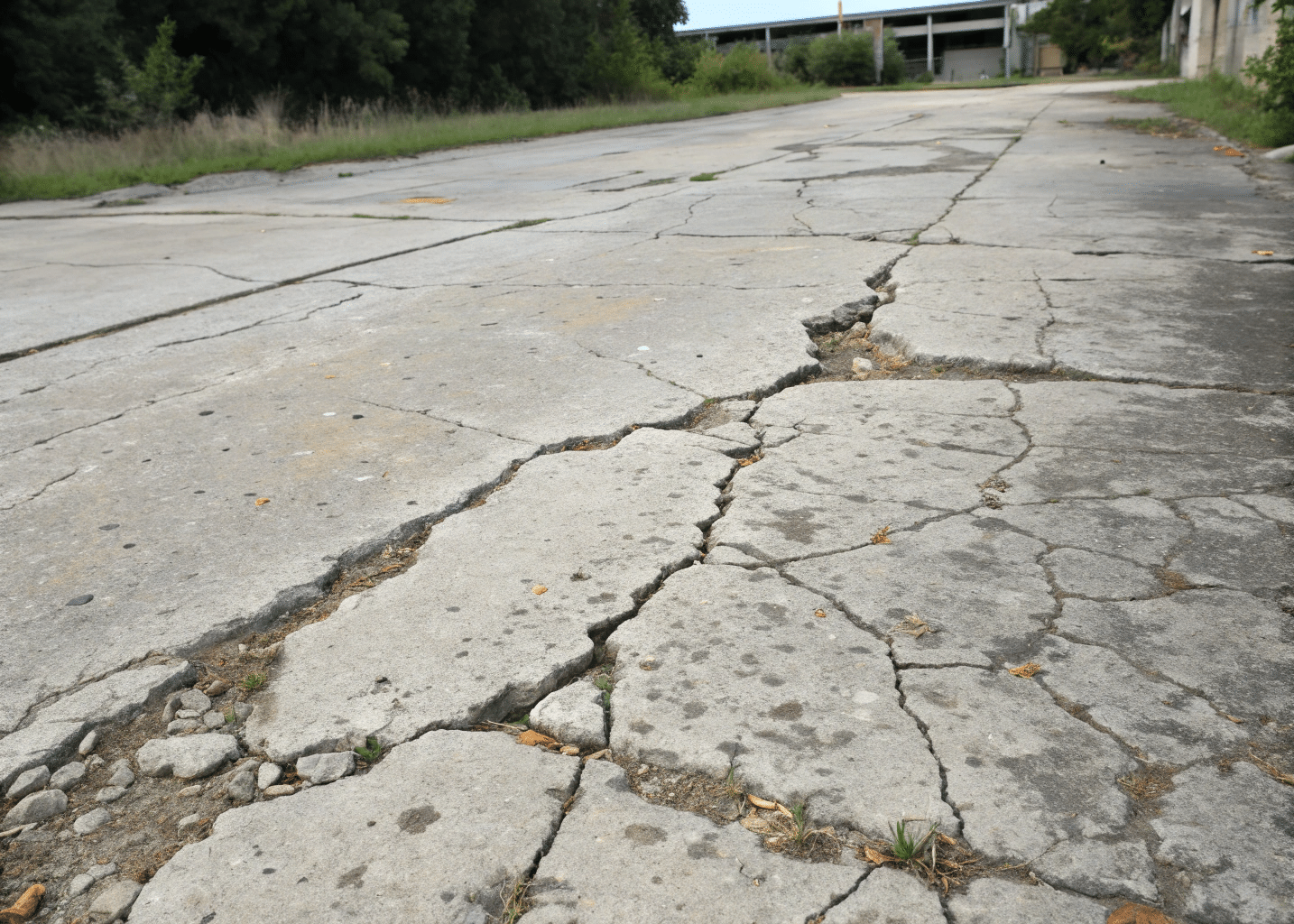
Conversely, some projects involve removing concrete that is already broken or loose. Storm damage, subsidence, and age can cause concrete to crack, heave, and break apart on its own. In these cases, the demolition work is already done by nature or time, and the primary service needed is removal. New Orleans properties frequently experience this due to soil movement, root intrusion, and flood-related damage. The cracked, uneven concrete simply needs to be picked up, loaded, and hauled away.
Foundation remnants from previously demolished structures are another example. If a building was torn down years ago but the concrete foundation was left in place, your project may require only removal of the existing broken material, with minimal additional demolition work needed.
Understanding the cost structure of each phase helps you evaluate estimates more effectively. Concrete demolition costs are driven by the type and thickness of concrete, whether it is reinforced with rebar or wire mesh, the method required (mechanical, sawcut, hydraulic split), accessibility for equipment, and the total volume of concrete to be broken. Demolition typically costs between $2 and $6 per square foot for standard slabs and more for reinforced structural concrete.
Concrete removal costs are driven by the volume and weight of material to be hauled, the distance to the disposal or recycling facility, disposal or tipping fees, and the equipment needed for loading. Removal typically adds $1 to $4 per square foot depending on volume and hauling distance. When evaluating contractor bids, check whether demolition and removal are priced together or separately. A combined price can make comparison easier, but separate line items give you more transparency into where your money goes.
Several factors specific to the New Orleans area affect both concrete demolition and removal. Soil conditions influence how concrete breaks and how easily pieces can be extracted. The high water table can cause water to fill excavation areas, complicating removal of below-grade concrete. Access limitations in older, narrower neighborhoods affect equipment selection and project duration. Local disposal facility locations and tipping fees affect removal costs.
TurnKey Demo Team understands these local conditions from years of working across the Greater New Orleans metro area. Our estimates account for the real-world factors that affect your project, not just textbook calculations. For related residential projects, read about residential demolition costs in New Orleans.
When you contact a demolition contractor, clearly describe what you need. Are you looking to break up and remove a concrete driveway? That is demolition plus removal. Do you have broken concrete piled up that needs to be hauled away? That is removal only. Is there a concrete structure that needs to be cut or broken but the material can stay on site? That is demolition only.
Clear communication helps your contractor provide an accurate estimate and schedule the right equipment and crew for the job. Contact TurnKey Demo Team or call (504) 732-9194 to discuss your concrete project. We will help you determine exactly what services you need and provide a detailed estimate.
For additional reading, explore our guides on commercial demolition processes, industrial demolition, and interior demolition for renovations. If your project is part of a larger decision about your property’s future, our article on tearing down versus renovating may help.
No. Concrete demolition is breaking the concrete apart using equipment like hydraulic breakers, saws, or crushers. Concrete removal is hauling the broken material away from the site. Most projects require both, but they are separate services with different cost structures.
Yes. Clean concrete (free of contaminants and hazardous materials) can be crushed into aggregate and reused for road base, fill, or drainage material. Recycling reduces disposal costs and environmental impact. Not all concrete is suitable for recycling, so your contractor should evaluate the material.
Concrete removal (hauling only, without demolition) typically costs $1 to $4 per square foot depending on volume, weight, and hauling distance. Combined demolition and removal generally costs $3 to $10 per square foot based on concrete thickness and reinforcement.
Permit requirements depend on the scope. Simple residential driveway removal may not require a permit, but work that affects drainage, public right-of-way, or utility connections typically does. Your contractor should verify permit requirements with the City of New Orleans before starting work.
A residential driveway or small slab can typically be demolished and removed in one day. Larger projects like commercial parking lots or industrial foundations may take several days to a few weeks depending on the volume and complexity of the concrete.
Common equipment includes excavators with hydraulic breaker attachments, concrete crushers and processors, diamond saws for precision cutting, skid steers for loading, and dump trucks or roll-off containers for hauling. The specific equipment depends on the concrete type, thickness, and project conditions.
 TurnKey Demo Team
  Jun 5, 2026